Cranial brain scrub, anyone?
Just as carbon can take the form of diamond or graphite, boron also comes in multiple forms — as many as 16 have been reported. Hiding behind the yawn-inducing name lies a complex chemistry which has frustrated chemists for over 200 years. It took a century of experimentation just to produce a 99% pure sample of the element following its discovery in 1808. In 2009 a professor at Stony Brook University, Artem Oganov, discovered a new pure form of boron which was almost as hard as diamond. On completion of his work he had this to say about the element: “Boron is a truly schizophrenic element. It’s an element of complete frustration. It doesn’t know what it wants to do. The outcome is something horribly complicated.”
I'm beginning to see what he means.
Boron is used as an ingredient in enamel glazes, a moth proofing solution for wool, an anti-fungal foot soak, a treatment for thrush in horses’ hooves, an indelible ink for dip pens, a curing agent for snake skins and salmon eggs, a neutron absorber in nuclear reactors and a solution for cleaning the brain cavities of skulls, should you feel so inclined.
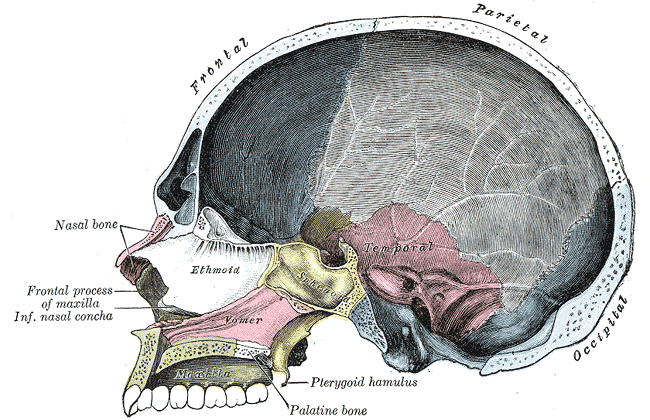
At this stage in the project I feel like my brain cavity could do with a good scrub.
Turkey is the world leader in boron production, with 29% of total global production. It's aiming to increase its boron production capacity to 3.4 million tons in 2015, and then kick on to 5.5 million tons in 2023. Eti Mine Works, a major state-owned producer, announced recently that it is planning to establish a facility where boron-blended cement will be produced. The cement will be stronger and more resistant to pressure than regular cements. Work done in the laboratory has shown excellent results.
4 borates make up 90% of the borates used in industry worldwide—colemanite, kernite, tincal and ulexite. Crystalline boron is rated at 9.5 out of a maximum 10 on Mohs scale of mineral hardness. Sound waves travel at 16,200 meters per second through boron (chlorine will slow sound to a miserable 206 meters per second). Boron makes up 0.00086% of the earth's crust, melts at a scorching 2077°C and has a density of 2.46 g/cm3.
This is either going to be a data-gasm or a data-clasm. There is no in-between.