Collaborative Audiences, Participant Story-Telling
At last week's Sandbox the fully-together Quipu (Matthew, Karen, Ewan, Sebastian, Maria and Ros) were brainstorming one of the major conflicts in our project: how to combine a powerful narrative that will attract wide attention, with maintaining the participation and agency of the Peruvian women who are contributing their testimonies as part of our story-telling project.
As you can see from the images of our discussions, we thought a lot about avoiding 'victimhood' as a narrative motif, and a lot about how the act of story-telling, of testimony-giving, can provide a positive narrative-centre to our project.
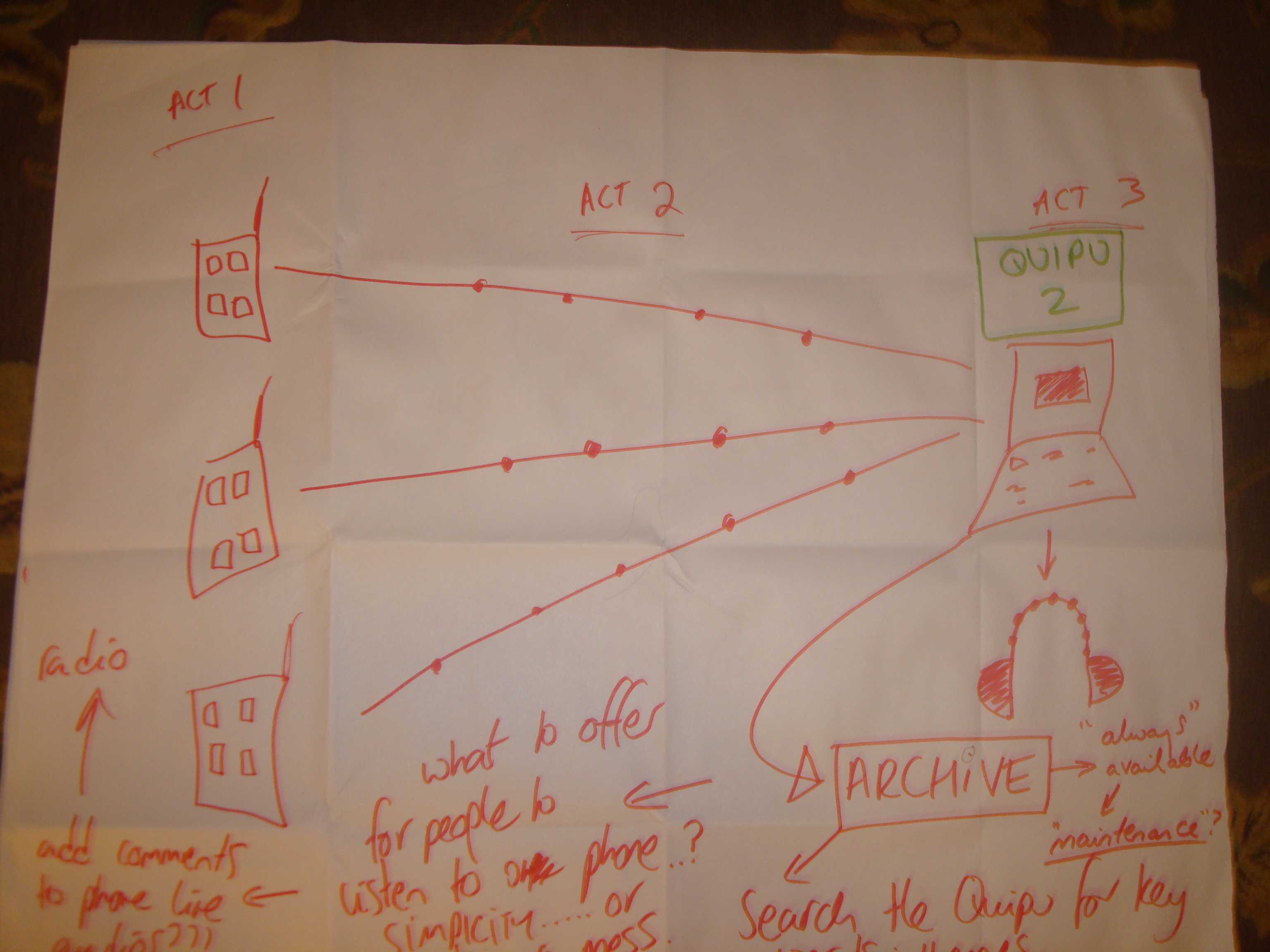
The image of the quipu - remember, the quipu is the multi-layered recording device used by Quechua-speaking peoples in history in the Andes, in which meaning is produced from threads and knots - remains central to the way that we want to present the testimonies we are gathering. Can we find a way to make phone lines our threads, mouse-clicks our knots? That is what Sebastian and Ewan are going to spend the next three weeks doing!
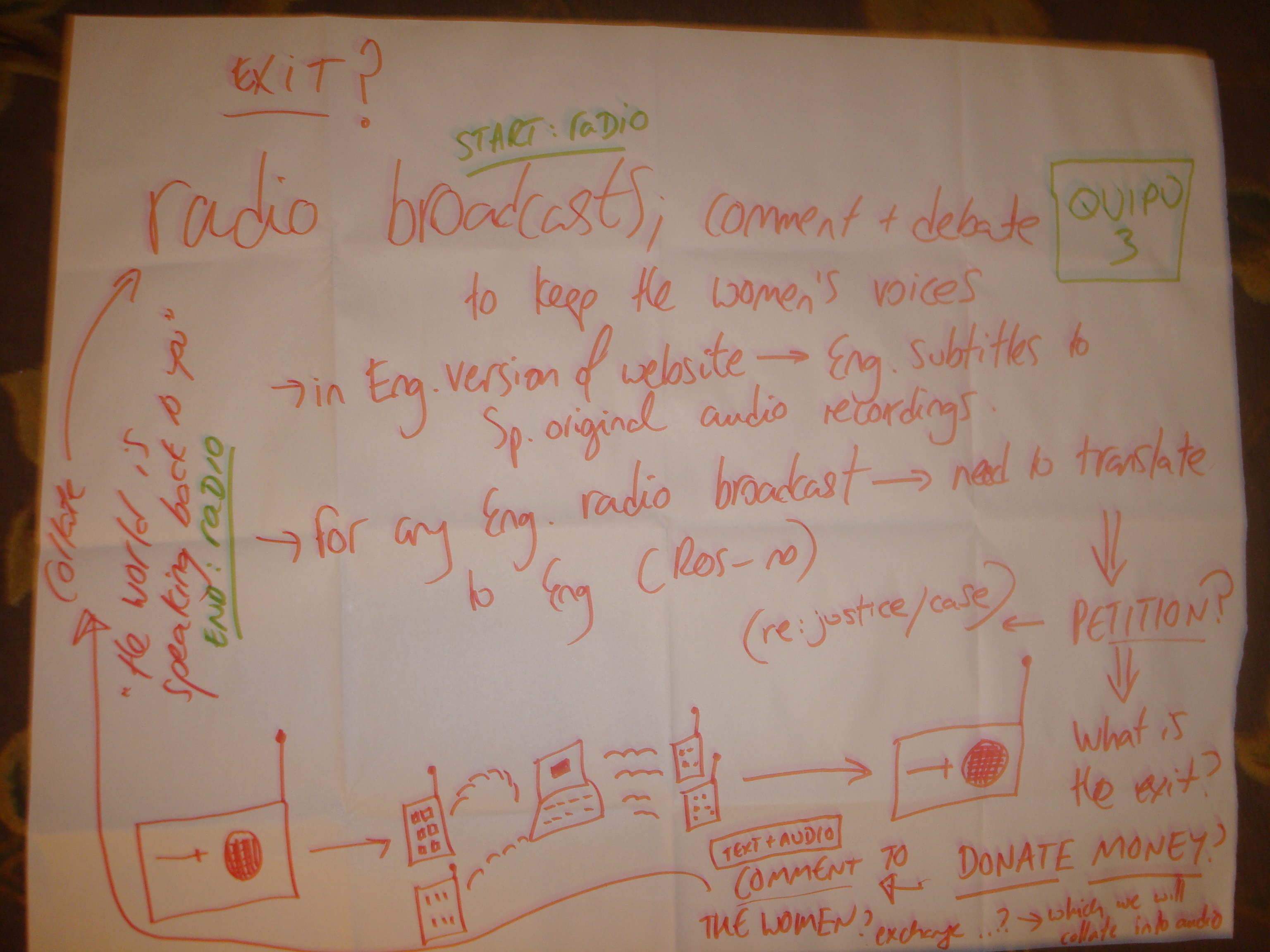
The final part of our discussions at the Pervasive Media Studies last week revolved how we can end our story: what do we want people to do once they have involved themselves with the stories we are collecting? Do we want them to take ownership of the subject, and press for political change or legal challenges? Do we want them to donate money to an organisation or a cause? Or do we just want to make them continue to consider the magnitude of the story: of the hundreds of thousands of people who were victims of the sterilization programme, but whose voices won't be heard through our project, no matter how successful we are? That might just be enough.