Winning, losing and getting involved
The Jack the Ripper: 125 project is working on a 'playable documentary' experiment to engage players in an experience of the Ripper phenomenon that is both fun and thoughtful. The design is currently developing in a dialogue between creative partner, researchers on the project, experts on the history and context, and REACT Hub Sandbox advisers. The last Sandbox was helpful in moving the dialogues along and bouncing off some other projects (as well as the inspiration boost from seeing them all develop) When the design reaches a more concete stage it will be sent for review by a small group convened by REACT and led by Sandbox advisor Catherine Catton (from UKTV). Down the track the Sandbox community will be recruited as part of our play-tester army.
A key question we are exploring in the design development right now is how to make a good game with playability and game goals one can progress towards and make the gameplay experience speak to the documentary ambitions of the project. These ambitions concern the progress of the player toward new knowledges, perspectives and even attitudes to the Ripper phenomenon: documentary is about offering reflective, critical and knowledge-building 'journeys'. Today people are much more familiar with interactively producing media and how this can give them various kinds of things. While games are usually identified with funtime, and with an experience meant to deliver personal satisfaction from playing well, they are also often giving players narrative-based experiences and (more or less explicitly) 'cuts' of the world.
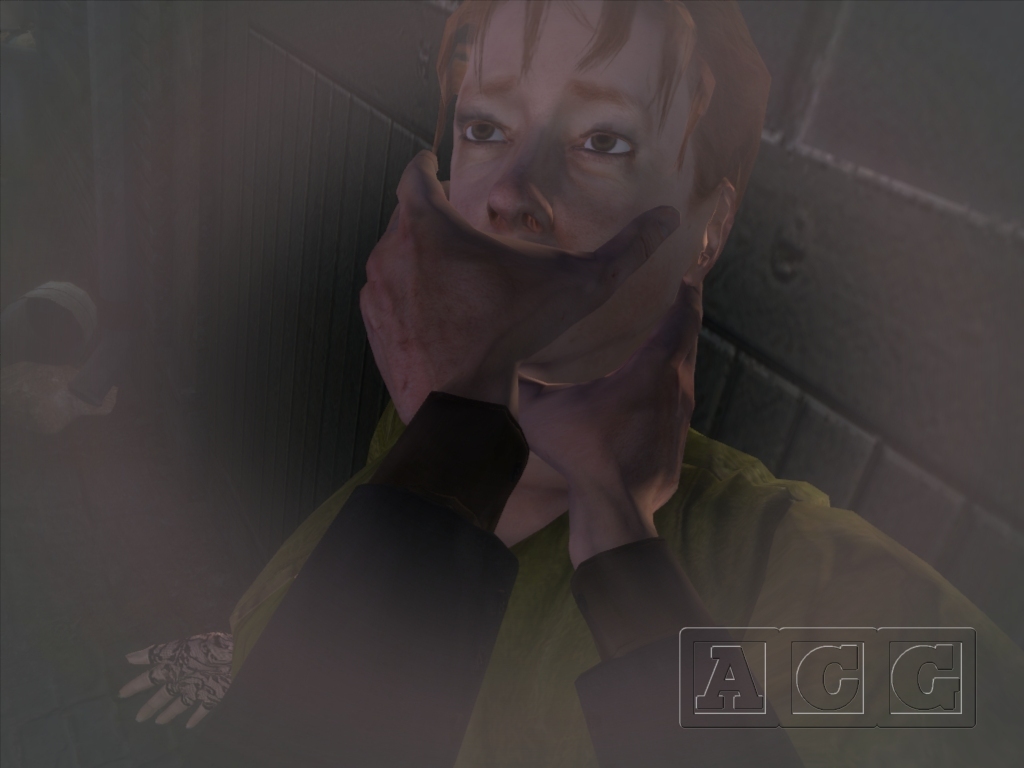
The Ripper 'story' is a mystery; there is no definite outcome to the main story-line of crime and investigation. So the mystery of 'whodunnit' is the predominant mode when it is treated in narrative forms--and in some games in different media, eg. Sherlock Holmes v Jack the Ripper (Frogwares 2009):
or this board game from the 1980s by Sleuth Productions:
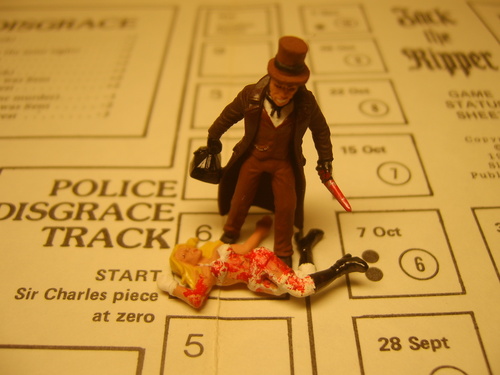
You can also see the sensationalism tradition continuing in these versions of the mystery of the murderer of women.
We are aiming for something different, more about the lives of people who lived through this time, in this part of London, and also about the legacy and parallels between then and now. The player might play as an investigator who needs to find things out, but not an 'armchair detective' who is leaning forward more to touch the screen/keypad. Maybe as a journalist sometimes, and perhaps as other characters representing real people's lives and challenges. but the murders happened, and the perpetrator was never brought to justice, so how do we design the player's goal-directed activity to get at this dimension of the events in a thoughtful way (which is not just more of the endless speculation about who got away with it)?. Somehow the player has to both win and lose in a sense.....
There's a great essay about winning and losing and thoughtulness from the online journal Game Studies called 'I lose therefore I think' by Sheun-Shing Lee. Lee suggests that a common strategy for 'critical' or serious game projects is to have the player play an unwinnable game to get them to stop and think about the very precepts of what it is to 'win' in the way the game has designed its experience (of war, or 'civilization advance', or making a fortune, etc). I think this is indeed a strategy that has been used, and one worth thinking about. But perhaps we need something a bit different.....